
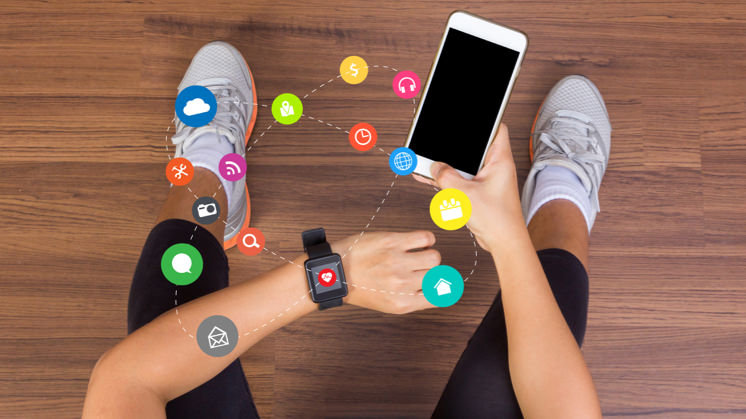
The relationship between humans and digital technology has historically been transactional. Computers sat on desks, smartphones remained in pockets, and users consciously reached out to interface with these machines to extract information or send messages. Today, that boundary is dissolving. The rapid evolution of the Internet of Things, miniaturized semiconductor architecture, artificial intelligence, and advanced biometrics is moving computing off our desks and directly onto our bodies.
Wearable technology has progressed far beyond its initial iterations as a niche accessory for early adopters. What began as basic pedometers and electronic wristbands tracking steps has transformed into a sophisticated ecosystem of highly integrated, continuous monitoring nodes. As connected devices become smaller, more energy-efficient, and increasingly autonomous, they are shifting from passive tracking gadgets into proactive, intelligent companions that fundamentally alter how we monitor health, manage environments, and interact with the physical world.
The Decentralization of Form Factors and the Rise of Ambient Wearables
For the past decade, the smartwatch has served as the undisputed anchor of the consumer wearable market. However, a major structural shift is underway as engineering breakthroughs allow manufacturers to compress complex processing units and multi-modal sensors into alternative form factors. This transition marks the dawn of ambient computing, where technology seamlessly integrates into daily attire and accessories, operating invisibly in the background.
The Expansion of Smart Rings and Minimalist Biometrics
Smart rings represent one of the fastest-growing niches in the connected device landscape. By moving sensors from the wrist to the finger, where blood vessels are closer to the surface of the skin, these compact devices achieve exceptional accuracy for metrics such as resting heart rate, blood oxygen saturation, skin temperature variations, and detailed sleep stages. Because they lack bright, distracting screens, smart rings appeal directly to consumers seeking the benefits of continuous health intelligence without the digital noise and notification fatigue associated with traditional smartwatches.
Smart Clothing and Electronic Skin
The integration of technology into the very fabrics we wear represents the next frontier of structural design. Smart clothing features conductive textile threads and flexible, nanomaterial-based sensors woven directly into shirts, socks, and athletic compression gear. This configuration allows for the precise tracking of complex biometrics, including real-time muscle workload, respiratory rates, and full-body posture analytics.
Furthermore, researchers are advancing the capabilities of electronic skin, which consists of ultra-thin, flexible, epidermal patches that adhere directly to the skin like a temporary tattoo. These biocompatible patches can monitor localized biochemical changes without disrupting daily routines or requiring a physical charging cable, making them highly effective for sports rehabilitation and clinical research.
The Shift from Fitness Tracking to Predictive Clinical Intelligence
The primary value proposition of consumer wearables is undergoing a massive paradigm shift. The era of simply documenting past physical activities, such as counting steps or measuring total workout duration, is giving way to a future dominated by continuous, predictive health intelligence.
Non-Invasive Biochemical and Sweat Analysis
Historically, tracking critical internal biomarkers required invasive blood draws or regular finger pricks. Next-generation wearables are overcoming this barrier by utilizing advanced biosensors capable of analyzing non-invasive biofluids, including interstitial fluid, sweat, and transcutaneous gases.
Continuous glucose monitors have already revolutionized daily life for diabetic patients, and this core technology is expanding to analyze a broader spectrum of health indicators. Emerging biosensors can track real-time hydration metrics, lactic acid buildup during intense exercise, and even breath ketone levels. This continuous molecular-level oversight provides a comprehensive view of metabolic health, allowing individuals to optimize their nutrition and physical performance based on real-time chemical data.
Early Anomaly Detection and Medical Safety Triggers
When paired with advanced machine learning models trained on vast population health datasets, modern wearables can identify subtle deviations from an individual’s unique physiological baseline before physical symptoms ever manifest. This capability transforms wearables into preventative early-warning systems.
Advanced algorithms can analyze heart rate variability and breathing patterns to flag the early onset of respiratory illnesses, catch dangerous cardiovascular irregularities like atrial fibrillation, or detect signs of extreme cognitive fatigue. In institutional care and remote patient monitoring networks, these devices feature automated safety triggers, instantly alerting healthcare providers or emergency services if an elderly patient suffers a sudden fall or exhibits critical vital sign anomalies.
Intelligent Integration with the Smart Home and Enterprise Ecosystems
Modern wearable technology no longer operates as an isolated extension of a smartphone. Instead, these devices are morphing into central control interfaces for the broader Internet of Things, connecting seamlessly with both smart homes and industrial enterprise environments.
Context-Aware Home Automation Control Panels
As ecosystem integration becomes the operational standard, wearables serve as intuitive, walking authorization keys for your surrounding environment. By communicating continuously with smart home hubs via ultra-wideband connectivity and low-energy communication protocols, your wearable can automate your physical space based on your real-time physiological state:
-
Thermal Regulation: If a smart ring or watch detects that your core skin temperature is dropping as you fall asleep, it can automatically signal the smart thermostat to adjust the room temperature for optimal sleep comfort.
-
Lighting Synchronization: Wearables can track your circadian rhythm patterns, prompting smart home lighting to dim or shift spectral frequencies as your body prepares for rest, minimizing blue light exposure naturally.
-
Security Automation: Proximity sensors within a wearable can securely authenticate your identity, unlocking smart deadbolts or deactivating home security networks automatically as you approach the front door, eliminating the need for physical keys or manual passcode entries.
Industrial Wearables and Workforce Optimization
In commercial and manufacturing environments, connected devices are driving measurable improvements in operational efficiency and worker protection. Industrial-grade wearables, including augmented reality smart glasses and biometric vests, are increasingly mandatory in advanced logistics and manufacturing facilities.
Smart glasses allow warehouse personnel and field engineers to visualize real-time assembly blueprints, overlay diagnostic data onto physical machinery, and receive remote assistance from off-site experts entirely hands-free. Simultaneously, biometric monitoring vests track worker core temperatures and physical exertion levels in extreme environments like foundries or construction sites, allowing management to mandate rest breaks before heat exhaustion or muscle strain causes a workplace injury.
Managing the Critical Constraints of the Connected Future
As the density of connected devices surrounding our bodies increases, the technology sector faces profound structural challenges regarding energy infrastructure, data fidelity, and consumer trust.
Overcoming Battery Performance Bottlenecks
The physical limitations of traditional lithium-ion batteries represent a primary restraint on long-term wearable adoption. Consumers are increasingly unwilling to charge multiple distinct devices every single night. To bypass this bottleneck, semiconductor manufacturers are focusing intensely on low-power system-on-chip architectures and heterogeneous integration, which maximizes computational throughput while drawing minimal power.
Concurrently, researchers are pioneering alternative energy-sourcing methods, including kinetic energy harvesting that charges a device through natural body movements, and micro-thermoelectric generators that convert ambient body heat into functional electrical power, working toward a future of perpetual, self-sustaining hardware operations.
Protecting On-Body Data Privacy and Establishing Security Borders
Because modern wearables collect highly intimate, continuous biometric data, including heart rhythms, geographic coordinates, and daily behavioral routines, they represent a high-value target for cyber threats and data misuse. Establishing robust security borders is paramount to maintaining consumer trust.
Manufacturers are increasingly processing sensitive health algorithms directly on the device using localized edge artificial intelligence, rather than transmitting raw data streams to external cloud networks. When data must be shared with electronic health records or fitness applications, advanced end-to-end encryption protocols and decentralized tokenization methods ensure that user identity remains thoroughly masked, giving consumers absolute sovereignty over their digital biological footprints.
Frequently Asked Questions
How do smart rings achieve accurate heart rate data without the tight wrist straps required by traditional smartwatches?
Smart rings leverage the unique anatomy of the human hand to optimize data fidelity. The arteries running through the fingers are larger and positioned much closer to the surface of the skin than the blood vessels located in the wrist. Because a properly sized ring maintains tight, uniform contact with the skin without requiring an adjustable strap, its optical photoplethysmography sensors experience significantly less movement distortion during daily activities, resulting in highly consistent resting heart rate and blood oxygen readings.
What is the difference between an optical sensor and an electrocardiogram sensor in a wearable device?
Optical sensors utilize flashing green or infrared light-emitting diodes to measure changes in blood volume as it pumps through your vessels, making them highly effective for continuous, everyday pulse tracking and calorie estimation. An electrocardiogram sensor measures the actual electrical signals generated by your heart muscle during contraction. By requiring the user to touch a specific metal contact on the device to complete an electrical circuit, the electrocardiogram produces a highly precise waveform that can be utilized by clinical professionals to diagnose specific medical anomalies like arrhythmias.
Can biometric clothing remain fully functional after passing through standard household washing machines?
Modern smart clothing is specifically engineered to withstand standard household laundry routines. The electronic components are divided into two categories: the active processing pods, which snap off the fabric before washing, and the underlying sensors and conductive silver or carbon threads, which are permanently insulated within waterproof, flexible polymer coatings. These specialized textiles can endure dozens of standard wash and dry cycles without experiencing structural degradation or electrical short-circuits.
How does edge artificial intelligence improve the functionality of connected wearable devices?
Traditional wearables act as basic conduits, capturing raw sensory data and sending it to a smartphone or cloud server to be analyzed. Edge artificial intelligence embeds compact, highly optimized machine learning models directly onto the wearable’s internal chip architecture. This allows the device to process complex data workloads locally and instantaneously, enabling real-time features like immediate crash detection or sudden heart anomaly alerts without requiring an active cellular connection or draining battery life through constant cloud transmissions.
Why are flexible displays considered a major breakthrough for the development of smart glasses?
Standard rigid glass displays require flat, angular housing units that add significant bulk, weight, and fragility to eyewear, often causing physical discomfort and limiting mainstream consumer acceptance. Flexible organic light-emitting diode panels can be bent, curved, and molded to fit the natural, ergonomic contours of traditional fashion eyewear. This allows manufacturers to embed high-definition data visualization screens into lightweight, durable, and stylistically normal frames that can be worn comfortably all day.
How do connected devices utilize ultra-wideband technology to differentiate between accidental and intentional commands?
Ultra-wideband technology operates on a high-frequency radio spectrum that measures the precise time it takes for radio pulses to travel between devices, calculating spatial distances down to the centimeter. This extreme spatial awareness allows a connected ecosystem to interpret intent based on proximity and orientation. For instance, if you simply walk past a smart television, the system recognizes you are passing through, but if you stop and point your wearable directly at the screen, the system registers the spatial orientation as a deliberate command interface.
